Automated Reporting Dashboards for Non-Technical Teams
Create simple reporting loops that bring metrics into one view and highlight what changed.
What this guide covers
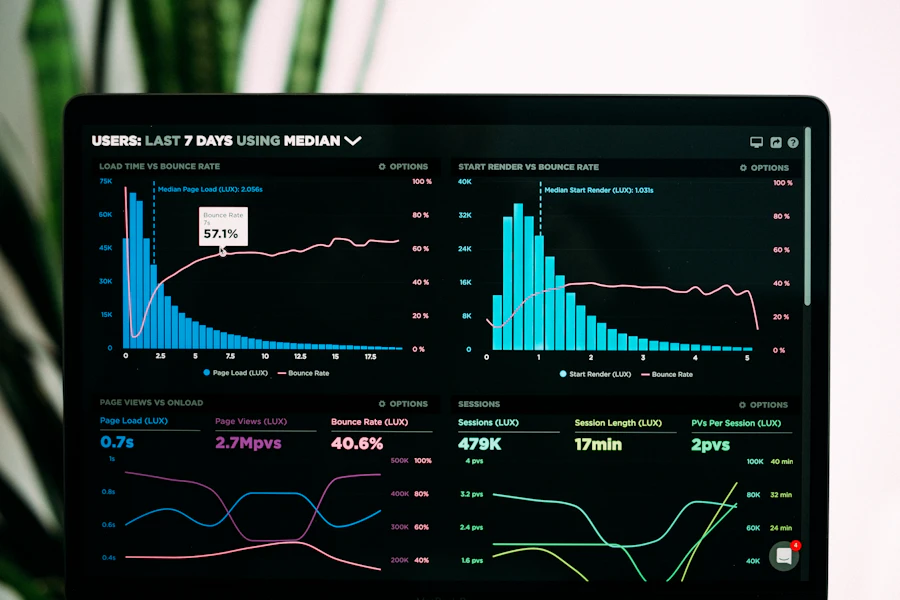
This guide is written for operators, marketers, founders, and managers who need clearer reporting who are searching for AI workflow automation examples and want advice that can be used in a real workflow, not just a list of trendy software names. The goal is to help you build dashboards that explain what changed, not just display charts.
Non-technical teams need reporting that supports decisions. Automated dashboards should collect the right data, highlight exceptions, and include a short narrative summary. That distinction matters because AI and SaaS tools only create leverage when they fit the way work already moves through your business. A tool that looks impressive in a demo can still fail if the inputs are messy, the team does not know when to review outputs, or the workflow creates another place to check every morning.
Who should use this approach
Use this playbook if you need a practical decision framework. It is especially useful when the team has already tried a few apps, sees potential in AI, but wants a clearer system for choosing tools, writing prompts, routing outputs, and measuring whether the work actually improves.
Recommended tools and setup
The strongest setup is usually smaller than expected. Instead of adding every new product to the stack, start with the jobs that repeat often and choose tools that support those jobs from start to finish.
- Google Sheets
- Looker Studio or similar dashboard tools
- Zapier or Make
- AI summary prompts
- Slack or email alerts
How to keep the stack focused
Assign each tool a clear role. One product should own the source material, one should help transform it, and one should hold the final record or next action. If two tools do the same job, keep the one that your team can use consistently and remove the other before the workflow becomes harder to maintain.
For Softbade readers comparing AI tools and SaaS products, this is the simplest rule: buy around a workflow, not around a feature. Features change quickly, but the underlying work of researching, deciding, drafting, approving, publishing, and reporting stays surprisingly stable.
Step-by-step workflow
A good workflow should be easy to explain to a teammate. It should define the input, the transformation, the review step, and the final destination. Use the following sequence as a starting point, then adapt it to your team size and publishing or operating cadence.
Step 1: Choose decision metrics
Treat this step as a checkpoint, not a vague suggestion. Decide who owns it, what information is required, what good output looks like, and where the result should live. When AI is involved, add a review standard so the team knows when an answer is useful enough to move forward.
Step 2: Connect data sources
Treat this step as a checkpoint, not a vague suggestion. Decide who owns it, what information is required, what good output looks like, and where the result should live. When AI is involved, add a review standard so the team knows when an answer is useful enough to move forward.
Step 3: Create a weekly snapshot
Treat this step as a checkpoint, not a vague suggestion. Decide who owns it, what information is required, what good output looks like, and where the result should live. When AI is involved, add a review standard so the team knows when an answer is useful enough to move forward.
Step 4: Add AI-written commentary
Treat this step as a checkpoint, not a vague suggestion. Decide who owns it, what information is required, what good output looks like, and where the result should live. When AI is involved, add a review standard so the team knows when an answer is useful enough to move forward.
Step 5: Review anomalies in team meetings
Treat this step as a checkpoint, not a vague suggestion. Decide who owns it, what information is required, what good output looks like, and where the result should live. When AI is involved, add a review standard so the team knows when an answer is useful enough to move forward.
How to evaluate options
SEO-friendly guides often compare tools by feature count, but feature count is rarely the best buying criterion. A better evaluation asks whether the tool improves the quality, speed, or consistency of a specific workflow.
- Does each metric support a decision?
- Is the data source trusted?
- Can non-technical users understand it?
- Are changes explained?
- Can alerts be tuned?
Decision framework
Score each option from one to five against the criteria above, then add one written note for the tradeoff you are accepting. For example, a tool may be faster to adopt but weaker for complex workflows, or powerful enough for advanced automation but too hard for non-technical teammates to maintain.
This keeps the decision grounded. It also creates a useful internal record when someone asks why the team chose a specific AI productivity tool, marketing tool, automation platform, or SaaS system.
Common mistakes to avoid
Most weak AI and SaaS implementations fail for ordinary reasons: unclear owners, vague prompts, no review step, too many tools, or no metric that proves the workflow improved. Watch for these traps before you scale the system.
- Tracking everything
- Ignoring data definitions
- Creating dashboards nobody reviews
- Letting AI summarize bad data
How to recover if the workflow gets messy
Pause expansion and audit one workflow at a time. Remove duplicate apps, rewrite unclear prompts, define the final destination for outputs, and put a person in charge of reviewing quality. A smaller system that people trust will outperform a larger system that nobody wants to maintain.
Metrics that matter
The best metrics connect tool usage to business or creative outcomes. Avoid measuring only how many prompts were sent or how many automations were created. Those numbers are easy to inflate and do not prove better work.
- report preparation time
- dashboard views
- decision cycle speed
- data errors found
- weekly review completion
What good progress looks like
After two to four weeks, you should see a visible reduction in manual effort or a visible improvement in quality. If neither is happening, the tool may still be useful, but the workflow needs a sharper job definition, better inputs, or a more realistic review process.
Conclusion
The best way to approach AI workflow automation examples is to start with the work, not the product category. Define the recurring job, choose a focused stack, create a repeatable workflow, and measure whether the result saves time or improves the quality of decisions and output.
Softbade is built to help you compare AI tools, SaaS products, and workflow ideas through that practical lens. As you continue exploring, use each article as a decision guide: what should this tool help us do, how will we review the output, and what metric will tell us it is worth keeping?